Every skier eventually asks the same question: does a ski helmet actually make that much difference, or is it just extra luggage weight? The truth is, a good helmet protects your head, keeps you warm, and lets you enjoy the mountain without constant worry. If you have already read our guide, QC Terme Chamonix Guide: 7 Mistakes Before You Book, you already know how much small planning mistakes can affect a ski trip. Packing the wrong helmet, or skipping it altogether, is one of those mistakes that skiers regret on day one.
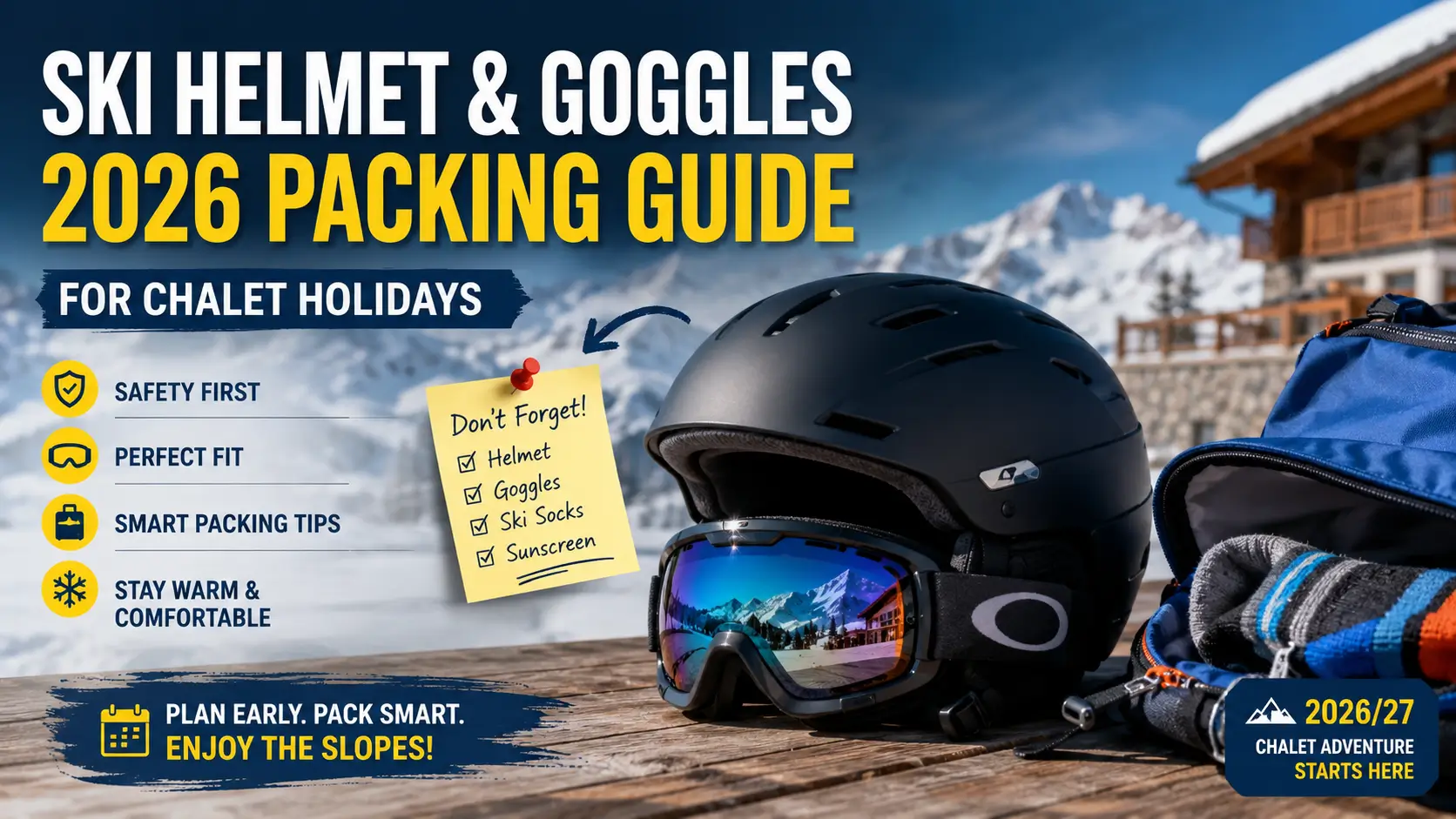
This 2026 packing guide covers everything you need to know about choosing the right ski helmet and goggles for your chalet holiday, from fit and safety certifications to common packing mistakes and expert tips. By the time you finish reading, you will know exactly what to look for, what to avoid, and how to pack your gear so it survives the journey to the mountains.
Table of Contents
Why a Ski Helmet Matters on Every Ski Trip
A ski helmet is not just a piece of gear, it is your first line of defense on the mountain. Falls happen even to experienced skiers, and a good helmet reduces the risk of serious head injury during those falls. Beyond safety, it also keeps your head warm in freezing temperatures, which matters a lot when you are staying in a mountain chalet and spending full days outside. Ski resorts across the Alps have also started requiring helmets in certain areas, so travelling without one can limit where you can ski.
Insurance providers are paying attention too. Some travel insurance policies now ask whether you were wearing protective headgear at the time of an accident, and skiing without one can affect a claim. This alone is a good reason to treat a helmet as essential gear rather than an optional extra.
How to Choose the Right Ski Helmet for Your Chalet Trip
Picking the right gear before you travel saves you time and stress once you reach the resort. Shops near busy ski towns get crowded during peak season, and last-minute buying often means settling for whatever is left on the shelf. The sections below break down exactly what to check before you buy or pack a ski helmet.
Get the Right Fit First
The most important factor when buying a helmet is fit, not style. A helmet that sits too loose will slide around and offer little protection, while one that is too tight will give you a headache after a few hours. Try it on in a store if possible, and make sure it stays firmly in place when you shake your head gently. Your ski helmet should feel snug but not painful, with enough room to wear a thin beanie underneath if needed. Measure your head circumference at home if you plan to buy online, since most brands publish sizing charts based on centimeters rather than small, medium, or large labels alone.
Check Ventilation and Comfort
A comfortable helmet has adjustable vents that let you control airflow. On sunny days, open vents keep your head cool, and on cold, windy days, you can close them for extra warmth. Padding inside the helmet also matters, since cheap padding wears out fast and becomes uncomfortable after a few days of skiing. Look for a helmet with removable, washable padding, since chalet holidays often mean skiing several days in a row without a break. A helmet that traps sweat and moisture can also start to smell after repeated use, so washable liners are worth the small extra cost.
Look for Safety Certifications
Never buy a helmet without checking its safety certification. In Europe, look for the CE EN 1077 standard, which confirms the helmet passed official impact tests. In the United States, check for ASTM F2040 certification instead. A certified ski helmet costs a little more, but it gives you real protection instead of just a warm hat with a hard shell. Skip helmets sold without any certification label, no matter how good the price looks. Certification labels are usually stitched inside the helmet or printed on a small tag, so check before you remove any packaging in case you need to return an uncertified product.
Ski Helmet or No Helmet: Is It Worth the Extra Weight?
Some skiers still ask if a helmet is really necessary, especially on easier slopes. The honest answer is yes. Head injuries are one of the most common serious injuries in skiing, and a ski helmet significantly lowers that risk in a fall or collision. The extra weight in your luggage is a small price compared to the protection you get. Many chalet holiday packages even include gear rental, so you do not have to carry a bulky helmet in your suitcase if you prefer to rent one locally. Parents skiing with children should treat this decision as non-negotiable, since young skiers fall more often and their balance is still developing.
Best Ski Goggles to Pair With Your Ski Helmet
Goggles are just as important as your helmet, and the two should work together, not against each other. A poor match between your goggles and helmet leaves a gap on your forehead, letting in cold air and wind. Always try your goggles with your helmet before you travel, since sizes and shapes vary between brands and can change from one model year to the next.
Lens Types for Different Weather
Ski goggles come with different lens tints for different light conditions. Clear or light yellow lenses work best on cloudy days, while dark or mirrored lenses suit bright, sunny slopes. If you can only pack one pair, choose a lens with medium tint and good UV protection, since Alpine sunlight is stronger than most people expect, even in winter. Photochromic lenses that adjust automatically to changing light are a good option if your chalet holiday includes mixed weather across the week.
Helmet and Goggle Compatibility
Before you buy new goggles, check that they fit smoothly against your ski helmet without gaps. Most modern brands design goggles and helmets to work together, but older or mismatched pairs can leave uncomfortable pressure points on your face. A quick fitting test at home saves you from discomfort halfway through your first ski day, and it takes only a few minutes.
Common Ski Helmet and Goggle Packing Mistakes
Many travelers pack their helmet at the bottom of a suitcase, where it gets crushed under heavy clothes and boots. This can damage the inner foam, which reduces the helmet’s ability to absorb impact even if the outer shell looks fine. Always pack your ski helmet on top of soft items, or carry it separately in a padded helmet bag. Another common mistake is forgetting to check the helmet for cracks or damage before a trip, especially if it has been sitting in storage since last season. A third mistake is leaving goggles loose in a bag, where the lens can scratch against zippers, keys, or other hard items during transit.
Ski Helmet Types Compared
Not every helmet is built the same way, and understanding the differences helps you choose the right ski helmet for your trip.
| Helmet Type | Best For | Weight | Durability |
|---|---|---|---|
| Hardshell | Beginners, rental use | Heavier | Very durable |
| In-Mold | Frequent skiers | Lightweight | Moderate |
| Hybrid | All-round use | Medium | Good |
Hardshell helmets are the toughest and often the most affordable, which makes them common in rental shops. In-mold helmets are lighter and more comfortable for full days on the mountain, though they can wear out faster with heavy use. Hybrid designs combine both methods, giving skiers a solid balance between durability and comfort. First-time skiers often start with a hardshell model because it tolerates rough handling, then switch to an in-mold or hybrid helmet once they ski more regularly.
Renting vs Buying a Helmet for Your Chalet Holiday
Deciding whether to rent or buy depends on how often you ski and how much you value fit and hygiene.
| Option | Pros | Cons |
|---|---|---|
| Renting | No luggage space needed, easy to try different types | Limited hygiene control, extra cost every trip |
| Buying | Better long-term fit, hygienic, no waiting at rental shop | Takes luggage space, higher upfront cost |
If you only ski once every year or two, renting makes more financial sense. Frequent skiers save money in the long run by owning their own gear, since it fits better and lasts longer with proper care. If you do rent, ask the shop for a fresh liner or a disposable cap, since shared helmets pass through many heads in a single season.
How to Pack Your Ski Helmet for Travel
Packing correctly protects your gear from damage during flights and transfers. Use a dedicated helmet bag if you have one, or wrap the helmet in a soft jacket inside your suitcase. Avoid placing heavy items like boots directly on top of it. If you are flying, carry the ski helmet in your hand luggage when possible, since checked bags get handled roughly and can crack the shell. Store goggles in their original case inside the helmet itself, since the hard shell offers extra protection for the lens during the journey.
Expert Tips for a Perfect Ski Helmet Fit
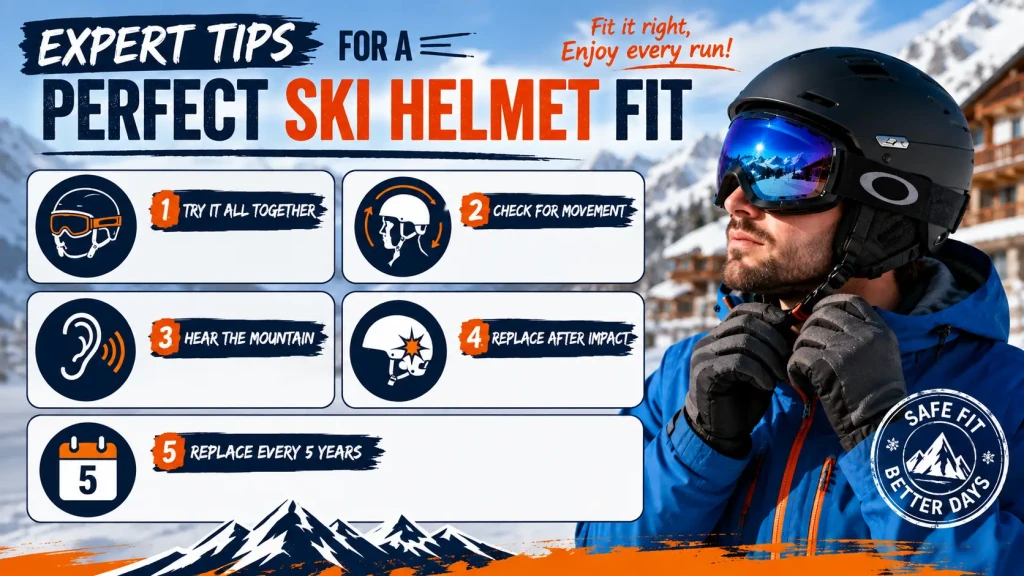
Try your helmet with the goggles and any hat or buff you plan to wear underneath, since adding layers changes how the helmet sits. Shake your head side to side and up and down; the helmet should not shift. Leave enough room for your ears to hear clearly, since ski resorts use sound signals and shouted warnings on busy slopes. Replace your helmet after any hard impact, even if it looks fine from the outside, since the protective foam can be damaged internally without visible cracks. Most manufacturers recommend replacing a ski helmet every five years even without an impact, since the foam breaks down slowly with age and temperature changes.
Catered vs Self-Catered Chalet: Which One Fits Your Ski Holiday?
Choosing between a catered and a self-catered chalet is one of the first decisions every skier faces when planning an Alpine trip. Both options offer comfort and mountain views, but they suit very different travel styles. Understanding the difference before you book can save you money, time, and a lot of unnecessary stress once you arrive.
What a Catered Chalet Offers
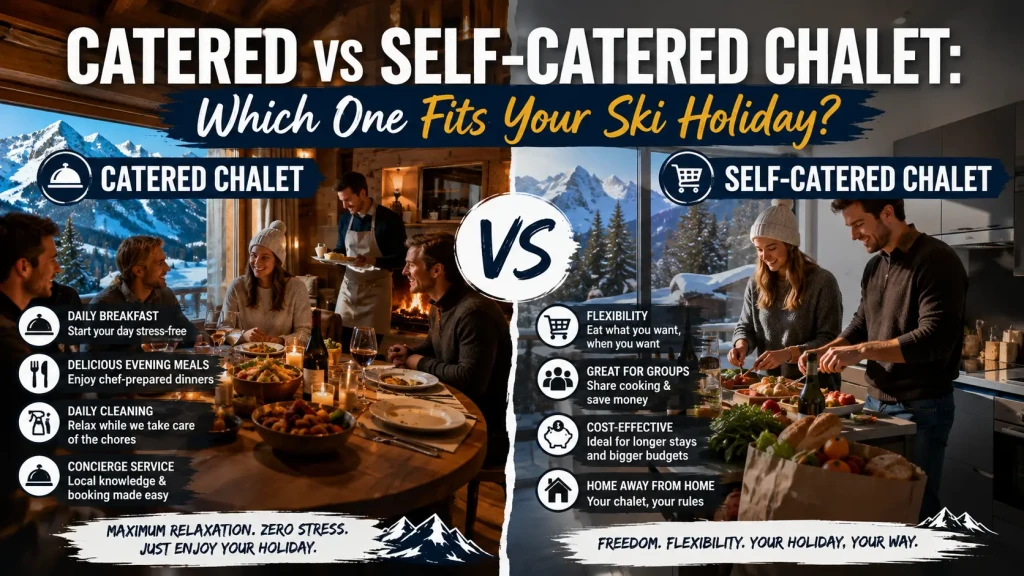
A catered chalet comes with a dedicated host who handles breakfast, afternoon tea, and a full evening meal most days of the week. This setup works well for families and groups who want to relax after a long day on the slopes without worrying about cooking or grocery shopping. Many catered chalets also include cleaning services and a welcoming atmosphere with fellow guests, which makes them popular for solo travelers and couples looking to socialize during their stay.
What a Self-Catered Chalet Offers
A self-catered chalet gives guests full control over their schedule and meals. There is no fixed dinner time, no shared dining table, and complete privacy throughout the stay. This option suits travelers who prefer flexibility, have dietary restrictions that are easier to manage themselves, or simply enjoy cooking as part of their holiday routine. It is also usually the more budget-friendly choice for larger groups splitting costs.
Comparing Cost and Convenience
Catered chalets generally cost more per person, since the price includes staff wages, food, and daily service. Self-catered chalets shift that cost toward groceries and personal time spent cooking and cleaning. Families with young children often prefer catered options for the convenience, while experienced ski groups sometimes favor self-catering to control their own pace.
Making the Right Choice for Your Group
There is no universal right answer here. A catered chalet suits guests who value convenience and social dining, while a self-catered chalet rewards those who want independence and flexible timing. Think about your group’s priorities, budget, and how much time you actually want to spend in the kitchen after a day of skiing before making your final decision.
What Else to Pack Alongside Your Ski Helmet
A complete ski kit includes more than just your helmet and goggles. Pack waterproof gloves, thermal base layers, ski socks, and a neck gaiter for extra warmth. Sunscreen is also essential, since snow reflects sunlight and increases the risk of sunburn even on cloudy days. Keep a small daypack for your chalet outings, so you can carry snacks, water, and a spare pair of goggles in case of fog or sudden weather changes. A small microfiber cloth is also worth packing, since it keeps your lenses clean without scratching them.
Conclusion
Packing the right ski helmet and goggles makes a real difference to how much you enjoy your chalet holiday. A well-fitted, certified helmet keeps you safe, warm, and comfortable through long days on the slopes, while the right goggles protect your vision in changing mountain light. Take time before your trip to check the fit, look for damage, and pack everything carefully so you arrive ready to ski from day one. Before you finalize your travel plans, it also helps to read our guide, Which Station de Ski Is Best for Your Family or Friends, so you choose a resort that matches your group’s skiing style as well as your gear.
Frequently Asked Questions
Do I really need a ski helmet for a chalet holiday? Yes. Most ski resorts recommend or require one, and it significantly reduces the risk of head injury on the slopes.
Can I rent a helmet at my ski resort instead of buying one? Yes, most resorts and chalet operators offer rental gear, though buying your own ski helmet ensures a better and more hygienic fit.
How do I know if my helmet still fits properly? Try it on with your goggles and check that it does not shift when you shake your head. Replace it if it feels loose or shows any cracks.
What is the correct way to pack a helmet for a flight? Carry your ski helmet in your hand luggage if possible, or wrap it in soft clothing inside your suitcase to avoid pressure damage.
Do ski goggles and helmets need to match brands? No, but they should fit together without gaps. Try your goggles with your ski helmet together before your trip to check compatibility.