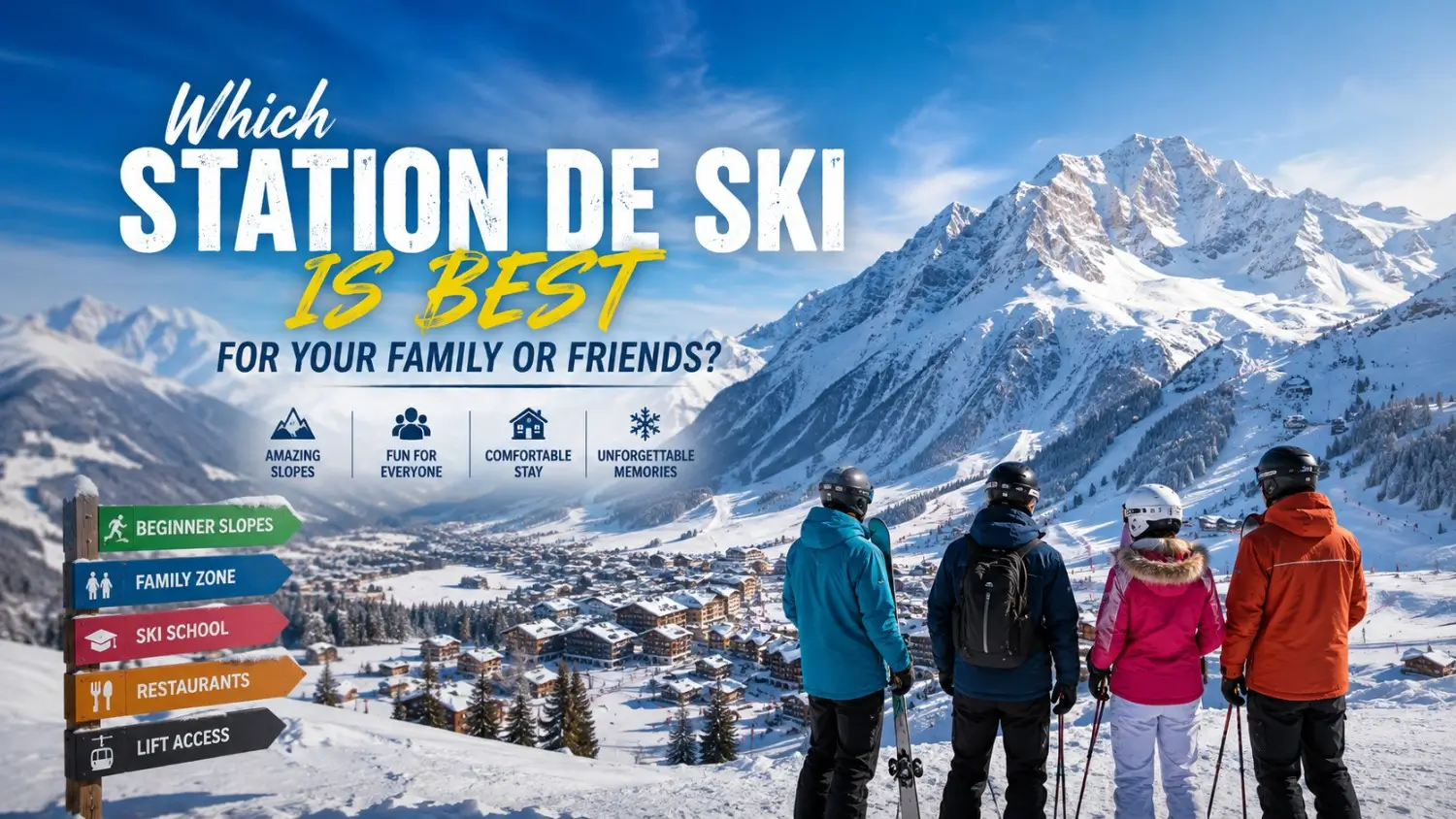
Choosing a ski destination can turn a great winter holiday into a stressful one if the resort does not match your group. A family with young children needs very different features from a group of confident skiers, while friends may care more about nightlife, challenging slopes, and après-ski. The right Station de Ski should make the whole trip easier, not simply offer the biggest mountain.
This guide explains how to compare French Alpine ski destinations by terrain, beginner facilities, snow reliability, accommodation, transport, food, activities, and atmosphere. You will also learn how to match a Station de Ski with different group types, avoid common booking mistakes, and build a practical shortlist before you reserve your winter holiday.
Related Article: Best Ski Resorts in Europe 2026/27 | Top Ski Destinations
Table of Contents
What Makes a Good Station De Ski for a Group?
A good Station de Ski needs to work for the people who will actually travel with you. A huge ski area can look impressive on paper, but size alone does not guarantee a better holiday. A family may spend most of its time on beginner slopes, while advanced friends may want long red and black runs.
Start by identifying your group’s ability levels. If everyone is a beginner, choose a resort with gentle nursery areas, reliable ski schools, short lift journeys, and accommodation close to the slopes. If your group includes mixed abilities, look for a destination where beginners can learn safely while stronger skiers can explore more demanding terrain.
The village itself also matters. A compact centre can save time because restaurants, shops, ski hire, and lifts sit close together. A spread-out Station de Ski may offer more accommodation choices but can require buses or long walks.
Station de Ski Choices for Families
Families usually need convenience more than extreme terrain. Parents often have to manage ski lessons, equipment, meals, naps, changing clothes, and tired children. A Station de Ski that reduces these small daily problems can feel much better than a larger destination with a complicated layout.
Look for wide beginner pistes, children’s ski areas, qualified instructors, and easy access to lifts. Ski schools that offer lessons for different ages can make planning much simpler. Check whether the resort provides childcare or non-ski activities if some family members do not want to ski every day.
Accommodation also deserves careful attention. A self-catering apartment can work well for families because parents can prepare simple meals and keep flexible schedules. Hotels can reduce cooking and cleaning, but they may provide less space.
Station de Ski Options for Friends
Friends often want freedom. One person may want to ski all day, another may prefer a relaxed morning, and another may care more about restaurants and nightlife. A good group destination gives everyone options without making the group feel separated.
Large linked ski areas work especially well for groups of experienced skiers because they offer different sectors and varied terrain. Les Trois Vallées, for example, links resorts including Courchevel, Méribel, Les Menuires, Val Thorens, and Orelle. Wikipedia describes it as the world’s largest connected ski area linked by lifts and pistes, with about 600 km of claimed ski slopes.
For friends, however, a smaller Station de Ski can sometimes provide a better social experience. If the main goal is skiing together, eating together, and walking between places in the evening, a compact village may beat a huge ski domain.
Compare Terrain Before Booking
Terrain should influence your decision more than marketing photos. Green runs usually suit beginners, blue runs provide a comfortable step up, red runs challenge intermediate skiers, and black runs suit advanced riders. Different countries use different grading systems, so always check the local piste map.
A mixed group should look for a balanced terrain profile. You do not need every slope to suit every skier. You need enough suitable terrain for each person and easy meeting points where the group can reconnect.
Les Arcs offers a useful example. Wikipedia lists more than 100 runs and around 200 km of descent in the resort, with terrain ranging from beginner areas to difficult runs. It also forms part of the wider Paradiski area with La Plagne.
Snow Reliability and Altitude
Snow conditions can strongly affect a winter holiday. Higher resorts often have an advantage when temperatures rise, but altitude does not guarantee perfect snow. Weather patterns, slope direction, snowmaking, and the timing of your trip all matter.
When comparing a Station de Ski, check the elevation of the village and the highest ski lifts. A high base can help early and late in the season, while extensive snowmaking can protect lower pistes during warmer periods.
Portes du Soleil shows why the whole elevation profile matters. The area stretches between France and Switzerland, with skiable terrain reaching high mountain areas while lower villages sit much lower. Wikipedia notes that snowmaking helps keep lower slopes open during warmer periods.
Village Atmosphere Matters
The best ski holiday is not only about skiing. After several hours on the mountain, people want a comfortable place to eat, rest, shop, or meet friends. Some villages feel traditional and quiet, while purpose-built resorts can offer direct slope access and modern facilities.
Families often prefer calm villages with pedestrian areas and easy evening routines. Groups of friends may prefer lively centres with bars, cafés, restaurants, and late-night options.
Do not assume that a famous Station de Ski automatically has the atmosphere you want. Read the layout carefully and identify where the main accommodation, lifts, restaurants, and entertainment areas sit.
Ski-in Ski-out or Central Accommodation?
Ski-in ski-out accommodation can save a surprising amount of time. You can put on your boots, walk a short distance, and reach the slopes without carrying equipment across the village. This feature can be especially valuable for families with children.
Central accommodation offers different benefits. You may have easier access to restaurants, supermarkets, cafés, and evening entertainment. If your group plans to ski only part of the day, a central location may provide better overall convenience.
When choosing a Station de Ski, compare the real walking distance rather than relying only on labels such as “near the slopes.” A property can sit close to a piste but still require a long route to the nearest lift.
Transport and Access
Travel time can shape the first and last days of your holiday. A beautiful mountain destination becomes less attractive if reaching it requires several difficult transfers.
Check the nearest airport, railway station, transfer time, road conditions, and local buses. If you travel with children or heavy ski luggage, fewer transfers can make a major difference.
Chamonix is a useful example of a destination with a strong mountain identity and established transport connections. Wikipedia notes that Chamonix sits in the French Alps near Mont Blanc and hosted the first Winter Olympics in 1924.
Station de Ski Comparison by Group Type
| Group type | What to prioritise | Best resort style |
|---|---|---|
| Young family | Beginner slopes, childcare, short transfers | Compact and convenient |
| Family with teenagers | Mixed terrain, activities, food choices | Medium or large resort |
| Beginner friends | Ski school, easy pistes, nightlife | Friendly village |
| Mixed-ability friends | Varied terrain, meeting points | Large linked area |
| Advanced skiers | Red and black pistes, off-piste access | High and extensive domain |
| Non-skiers in the group | Shops, spas, restaurants, activities | Lively village |
This simple comparison can reduce the number of destinations you need to research. Instead of asking which resort is the most famous, ask which Station de Ski solves the needs of your group.
Station de Ski Features That Save Time
Small practical details can have a big effect on your holiday. Look for equipment hire close to the accommodation, lockers near the lifts, supermarkets within walking distance, and ski schools that start near beginner areas.
Families should also check whether restaurants accept children comfortably and whether apartments include useful features such as kitchens, storage, and washing facilities. Friends should check late-opening food options, après-ski venues, and transport after dinner.
Another useful feature is a clear village layout. If everyone can reach a central meeting point easily, the group can split up during the day without losing contact.
Budget: More Than the Lift Pass
A common mistake is to compare only accommodation prices. The total cost can include lift passes, ski lessons, equipment hire, transfers, food, insurance, parking, and activities.
A cheaper apartment may sit far from the slopes and require daily transport. A more expensive property near a lift may reduce other costs and save hours during the week.
Create a simple total budget before booking. Estimate the main costs for each person and then compare the full holiday price rather than the room rate alone.
How Resort Size Changes the Experience
A huge ski domain offers variety and exploration. You can ski in different valleys, try new pistes, and spend several days without repeating the same route. Les Trois Vallées is an extreme example, with a very large connected network and numerous resorts.
A smaller Station de Ski can offer simplicity. You may learn the piste map quickly, recognise familiar restaurants, and spend less time travelling between sectors. This can suit young families, beginners, and groups that value social time.
The best choice depends on how much variety you will actually use. If beginners will stay on a few easy runs, paying for a massive ski area may add little value.
France and Switzerland: What Should You Expect?
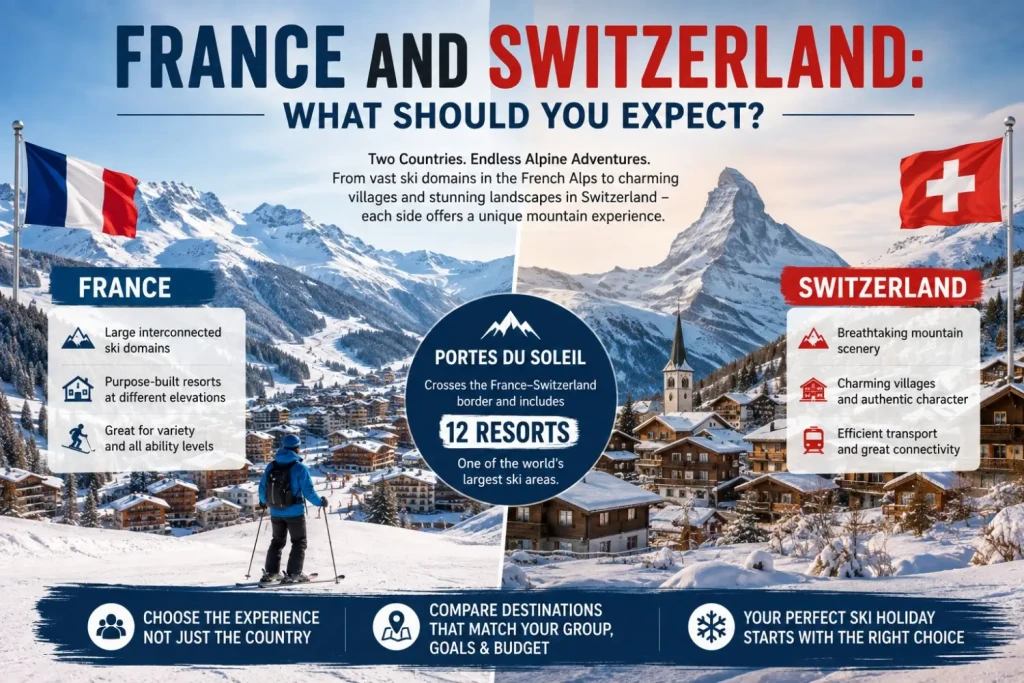
French Alpine destinations often offer large interconnected ski domains and purpose-built accommodation at different elevations. Swiss resorts can provide a strong mix of mountain scenery, village character, and efficient transport, although costs can vary widely.
Portes du Soleil is particularly interesting because it crosses the France-Switzerland border and includes multiple resorts. Wikipedia identifies it as one of the world’s largest ski areas and notes that it includes twelve resorts.
Do not choose a country first and a Station de Ski second. Choose the experience first, then compare destinations that can deliver it.
Station de Ski Choices for Different Ability Levels
Beginners need confidence. A good beginner resort should provide gentle slopes, clear signs, suitable ski schools, and places where learners can rest without travelling far. Intermediate skiers usually benefit from a wide selection of blue and red pistes. They often want to explore more terrain each day and may appreciate linked sectors.
Advanced skiers should investigate steep pistes, challenging itineraries, freeride zones, and mountain-guide services. Off-piste terrain requires proper knowledge, equipment, and local guidance when conditions demand it. A group with several ability levels should avoid choosing a Station de Ski solely because it has famous expert terrain. If half the group feels uncomfortable, the holiday can quickly become frustrating.
Common Mistakes to Avoid
One common mistake is choosing a Station de Ski because it appears on a list of famous ski destinations. Reputation does not tell you whether the village fits your group. Another mistake is ignoring the location of the accommodation. A property described as “close to skiing” may still require a bus journey or a difficult walk in ski boots.
Some travelers also underestimate travel time. A transfer that looks acceptable on a map can feel much longer after a flight and several hours of travel. Finally, do not book without checking the piste map. Study the beginner areas, lift connections, village entrances, and routes back to your accommodation.
Expert Tips for Choosing the Right Resort
Make a shortlist of three to five destinations and score each one against the same criteria. Give points for terrain, snow reliability, accommodation, access, food, activities, atmosphere, and price.
For families, give extra weight to convenience and beginner facilities. For friends, give more weight to terrain variety and evening options. For mixed groups, focus on the ability to separate during the day and meet easily later.
A useful rule is simple: choose the Station de Ski that creates the fewest daily problems. A slightly smaller ski area with easy logistics can produce a better holiday than a huge destination that requires constant travel.
Station de Ski Decision Checklist
Before paying a deposit, confirm the following details. Check the village elevation, ski area size, piste difficulty, ski school options, accommodation distance from lifts, equipment hire location, transfer time, food options, and activities for non-skiers.
Also check the cancellation terms and what happens if weather or transport problems affect your trip. Travel insurance can provide useful protection, but you should understand what your policy actually covers.
If children are travelling, confirm lesson times and meeting points before arrival. If friends are travelling, agree on the group budget and decide whether everyone needs the same lift pass.
FAQs
What is the best ski resort for a family?
The best choice depends on the children’s ages, skiing ability, and the parents’ priorities. Look for gentle slopes, good ski schools, convenient accommodation, and activities beyond skiing.
How do I choose a ski resort for mixed abilities?
Choose a destination with beginner, intermediate, and advanced terrain plus easy meeting points. A large linked area can work well, but a smaller resort may provide a simpler experience.
Is a bigger ski area always better?
No. A large area provides more variety, but you may not use most of it. Beginners and young families can benefit more from convenience than from hundreds of kilometres of pistes.
What should I check about snow conditions?
Check the resort’s elevation, highest lift, snowmaking coverage, typical opening period, and recent seasonal conditions. Remember that weather can change quickly in the mountains.
Is ski-in ski-out accommodation worth paying more for?
It can be worthwhile for families and groups that ski every day. It reduces walking, equipment carrying, and travel time. However, central accommodation may offer better access to shops and restaurants.
Which resort type suits friends best?
Friends often enjoy resorts with varied terrain, good restaurants, après-ski, and flexible accommodation. Mixed-ability groups should prioritise a destination where everyone can find suitable pistes.
How early should I choose a ski resort?
Start comparing several months before your planned trip, especially for school holidays and popular French Alpine destinations. Early planning gives you more choice of accommodation, lessons, transfers, and equipment.
Conclusion
The right Station de Ski is not necessarily the biggest, highest, or most famous destination. It is the place that matches your group’s ability, budget, travel style, and expectations.
Families should focus on easy logistics, beginner areas, childcare, and comfortable accommodation. Friends should consider terrain variety, village atmosphere, food, and après-ski. Mixed groups should find a balance that lets strong skiers explore while beginners learn without pressure.
Take time to compare the whole experience rather than one headline feature. When you choose the Station de Ski around the people travelling with you, the mountain becomes easier to enjoy and the holiday feels far more relaxed.