
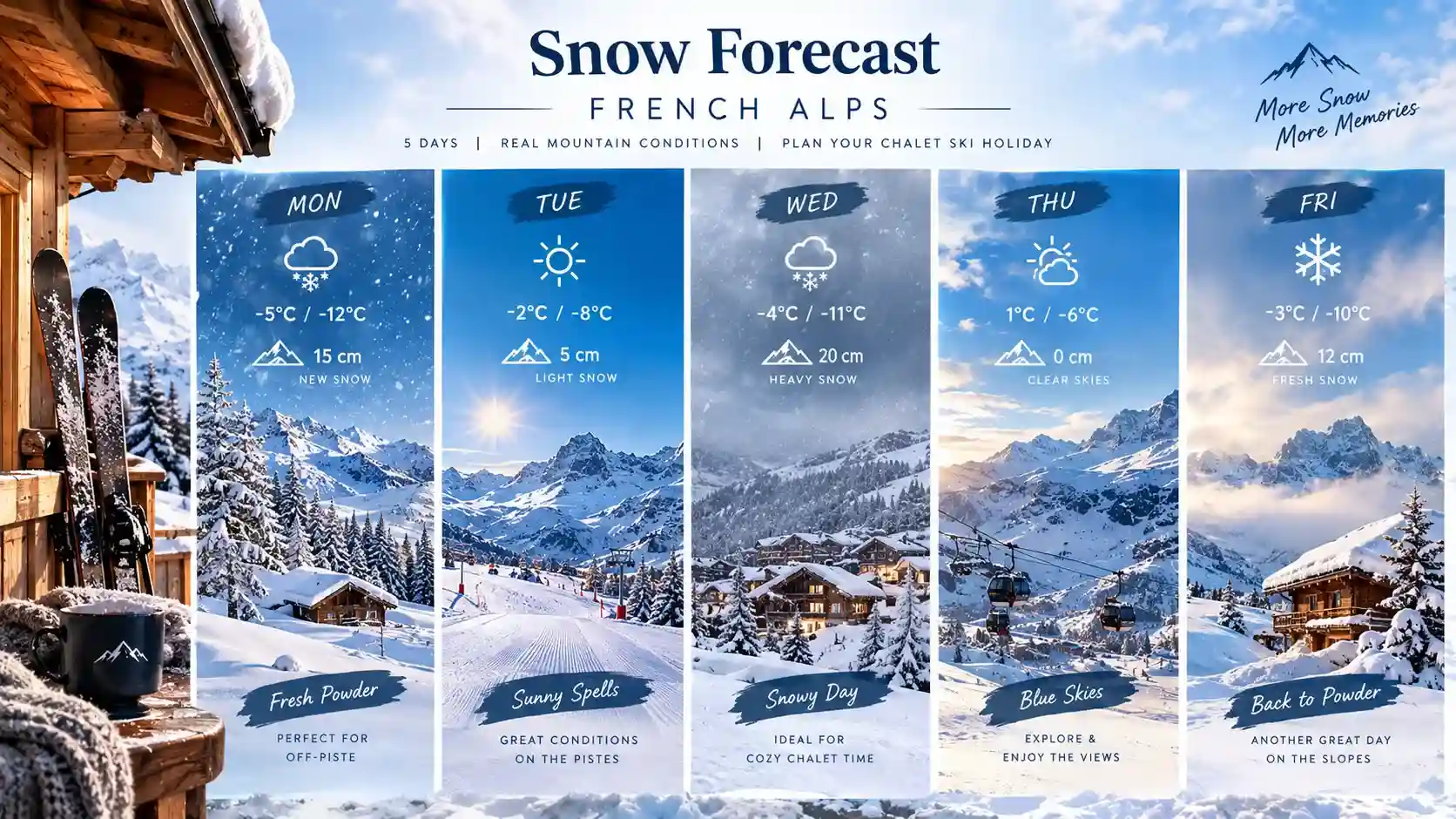
Two skiers can stand in the same French resort during the same week and live two very different holidays. One floats through deep, soft powder before lunch. The other scrapes down hard, icy pistes and wonders what went wrong. In most cases, the gap comes down to one habit: reading the snow forecast before choosing the day, the slope, and even the chalet.
This guide shows you how to read a snow forecast for the French Alps like a seasoned mountain guest. You will learn how forecasts work, which numbers matter, how each major resort behaves, and when to plan your chalet ski holiday. You will also see common mistakes, simple tips, and answers to the questions skiers ask most. Every section uses plain language, so you can use the information right away.
Table of Contents
What Is a Snow Forecast?
A snow forecast is a prediction of how much snow will fall in a mountain area, when it will fall, and what kind of snow you will find on the ground. Weather services build it from computer models, satellite data, and live readings from stations on the mountains.
A good forecast goes beyond the words “snow tomorrow.” It tells you the expected depth, the height where snow turns to rain, the wind speed, and the temperature. Together, these details show whether you will ski powder or slush.
Snow Forecast vs. Normal Weather Forecast
A town forecast tells you whether you need an umbrella. A mountain snow forecast tells you what happens on the slopes above the town. The two can differ a lot. A valley can get rain while the upper lifts collect heavy snow. Skiers who check only the valley report often miss the best conditions higher up.
Snow Report vs. Snow Forecast
Many guests mix up these two terms. A snow report describes the snow right now, including base depth, new snow in the last 24 hours, and open lifts. A snow forecast looks ahead. You need both. The report shows today’s reality, and the forecast helps you plan the days to come.
How a Snow Forecast Is Made
Meteorologists use several tools. Satellites track storms as they cross the Atlantic. Radar shows where snow falls at this moment. Automatic stations on the peaks measure wind, temperature, and snow depth. Supercomputers then run models that predict how the atmosphere will move over the next hours and days.
Global and Local Models
Global models, such as the American GFS and the European ECMWF, cover the whole planet. They handle big weather systems well. Local models, such as the French AROME, use a finer grid. They capture how valleys and ridges shape the weather. For the Alps, local models often give better detail over the next two or three days.
Why Forecasts Change
Mountain weather is hard to predict. A storm can shift by fifty kilometers and drop its snow on a different valley. Because of this, experts trust a forecast more when several models agree. When models disagree, treat the numbers as a rough guide, not a promise.
Key Numbers to Read in a Snow Forecast
Several terms appear in almost every forecast. Learn them once, and you can read any report with confidence.
Snowfall Amount
Forecasts usually show new snow in centimeters per day. Ten to twenty centimeters gives a pleasant refresh. Thirty centimeters or more often makes a true powder day. Remember that totals are estimates, and the mountain can deliver more or less at different heights.
Freezing Level and Snow Line
The freezing level is the height where the air reaches zero degrees Celsius. The snow line sits a little below it. When the freezing level is high, rain falls on the lower slopes. Check this number first if your chalet sits in a lower village.
Wind, Visibility, and Temperature
Strong wind closes high lifts and packs snow into thick drifts. Low cloud cuts visibility and makes the slope surface hard to read. Temperature shapes the snow itself. Cold air keeps it light and dry, while warm air makes it heavy and wet.
Quick Reference Table
| Term | What It Means | What It Tells a Skier |
|---|---|---|
| New snow | Snow that fell in the last 24 hours | Powder potential |
| Freezing level | Height where the air hits 0°C | Rain or snow on lower slopes |
| Wind speed | Wind strength at the summit | Likely lift closures |
| Cloud base | Height of the lowest clouds | Visibility on the slopes |
| Snow quality | Dry, wet, or crusty | Feel and speed of the snow |
| Avalanche level | Scale from 1 to 5 | Safety away from marked runs |
Snow Forecast for Popular French Alps Resorts
Each resort sits at a different height and faces a different direction. A regional snow forecast therefore means different things in different places. Here is how the best-known resorts behave.
Chamonix
Chamonix sits at about 1,035 meters in a deep valley beneath Mont Blanc. The village can see rain while the upper slopes get snow, so guests should watch the freezing level. The high terrain around the valley holds snow well and keeps expert skiers busy all winter.
Courchevel 1850
Courchevel 1850 lies at around 1,850 meters, which gives it a dependable base. At this height, snow falls more often than rain. The slopes link to the wider Three Valleys, and the resort grooms its pistes to a very high standard.
Méribel
Méribel stands at about 1,450 meters in the heart of the Three Valleys. Lifts rise quickly to higher slopes, so guests can chase fresh snow without leaving the area. Chalets near the pistes make early starts easy after a snowy night.
Morzine
Morzine sits near 1,000 meters and belongs to the large Portes du Soleil area. It is lower than many rivals, so it can see more rain during warm spells. The forests, however, give shelter on stormy days, and powder lasts longer among the trees.
Val d’Isère
Val d’Isère lies at around 1,850 meters, and its slopes climb to glacier height. This resort often keeps good snow when lower areas struggle. That makes it a strong choice for early- and late-season trips.
Sainte Foy
Sainte Foy sits near 1,550 meters on a quieter, sunny hillside. Fewer visitors mean untracked snow stays available for days after a storm. Many powder lovers rate it highly for this reason.
Best Time to Ski in the French Alps
The main season runs from December to April. Each month has its own character, so match your dates to your goals. Remember that the table below shows typical patterns, not guarantees, because every winter behaves differently.
| Month | Typical Conditions | Best For |
|---|---|---|
| December | Snow builds up, but the cover can be thin early on. | Festive atmosphere |
| January | Cold, dry, and often reliable | Powder and quieter slopes |
| February | Good cover, but very busy. | Families and school holidays |
| March | Longer, sunnier days | Relaxed skiing and mild weather |
| April | Warmer, softer snow | High resorts and lower prices |
Early Season Tips
Early winter can be a gamble. Check the snow forecast closely in the weeks before your trip, and pick a high resort such as Val d’Isère or Courchevel 1850. Higher altitude gives you a better chance of solid cover.
Mid-Season Tips
January and February give the most dependable snow. February also brings the biggest crowds, so book early. If you want powder with fewer people, January often wins.
Spring Skiing Tips
March and April bring warm sun and soft snow in the afternoon. Ski early while the surface stays firm, then relax on a sunny terrace. Lower resorts can lose their snow quickly in April, so choose a high one.
How to Use a Snow Forecast to Plan Your Ski Holiday
A forecast becomes useful only when you act on it. Follow a simple routine and you will make better choices at every stage.
Before You Book
Long-range outlooks show only broad trends, such as a colder or snowier winter than usual. Use them as a hint, not a rule. At this stage, focus on altitude, snow history, and the length of the resort season. Those facts matter more than any distant prediction.
One Week Before You Travel
Start checking the daily snow forecast about seven days out. Watch the pattern, not the exact numbers. If a big storm looks likely, pack extra layers and plan for slower roads and transfers. If a warm spell looks likely, consider skiing higher in the day.
During Your Stay
Read the snow forecast each evening and make a plan for the next day. A snowy morning may suit sheltered tree runs. A clear afternoon may suit high, open slopes. Planning the night before keeps you ahead of the crowds.
How Far Ahead Can You Trust a Snow Forecast?
Accuracy drops as the dates move further away. This is true for every weather service, and no app can change it. The table shows a sensible way to use each time range.
| Timeframe | Reliability | How to Use It |
|---|---|---|
| 1 to 2 days | High | Plan your exact runs and start times. |
| 3 to 5 days | Good | Choose your big ski days and rest days. |
| 6 to 10 days | Moderate | Watch trends and prepare your gear. |
| Beyond 10 days | Low | Treat as general guidance only. |
A snow forecast loses accuracy quickly after a week because small errors grow over time. Many skiers book a week or two in advance and then feel upset when the forecast changes. Instead, stay flexible and accept that mountains do what they want.
Choosing a Chalet Based on Snow Conditions
Your chalet shapes how well you use the snow. A ski-in, ski-out chalet lets you step onto the slope after a fresh fall, with no bus or walk. That is a huge advantage on a powder morning, when every minute counts.
Altitude matters too. A chalet in a higher village faces less risk of rain and gives you reliable access to snow. Guests who stay in lower villages should check how close the lifts and shuttles are.
Comfort also makes a difference on storm days. Many luxury chalets offer hot tubs, saunas, cinema rooms, and private chefs, so a day of heavy weather feels like part of the holiday. Use the snow forecast to decide which days to ski hard and which days to relax at home.
Powder Day Tips from Experienced Skiers
Powder is the reason many guests visit the Alps. A few simple habits help you enjoy it fully.
Start Early
Fresh snow gets tracked out fast. Reach the first lifts before they open, and head for the highest, steepest terrain that the patrol has cleared.
Follow the Wind
Wind moves snow from one side of a ridge to the other. The sheltered side often holds the deepest, softest powder. Watch which way the wind blows and ski the protected slopes.
Choose the Right Gear
Wider skis float better in deep snow. If you ski only a few days a year, rent a pair of powder skis. Good goggles also help, because snowfall and cloud reduce visibility.
Hire a Local Guide
A guide knows where the snow collects and where the hidden dangers sit. A good guide also saves you time, since you will spend more time skiing and less time searching.
Avalanche Safety and Forecasts
Fresh snow brings joy, but it also brings risk away from marked runs. Mountain authorities publish an avalanche bulletin that rates the danger from 1 to 5. A snow forecast does not replace this bulletin, and you should read both before you leave the marked pistes.
If you ski off-piste, carry a beacon, a shovel, and a probe, and know how to use them. Never ski alone, and always follow the advice of local guides. After heavy snow or strong wind, danger rises, so stay on the pistes until conditions settle.
Common Mistakes Skiers Make
Even experienced guests slip up. Avoid these habits and your trips will go more smoothly.
Trusting Only One Source
Every service has strengths and weaknesses. If you rely on one snow forecast, you risk missing a change. Compare two or three sources, and trust the pattern they share.
Ignoring the Freezing Level
Many skiers look at snowfall totals and forget about the height of the snow line. Ten centimeters of snow means little if rain falls on your slope.
Chasing the Biggest Number
A huge forecast total sounds exciting, but heavy snow can close lifts and roads. Sometimes the best day comes after the storm, when the sky clears and the powder is fresh.
Forgetting About Altitude
Snow can fall at the top of a resort while the base gets rain. Always check conditions at several heights before you plan your day.
Pros and Cons of Relying on Forecasts
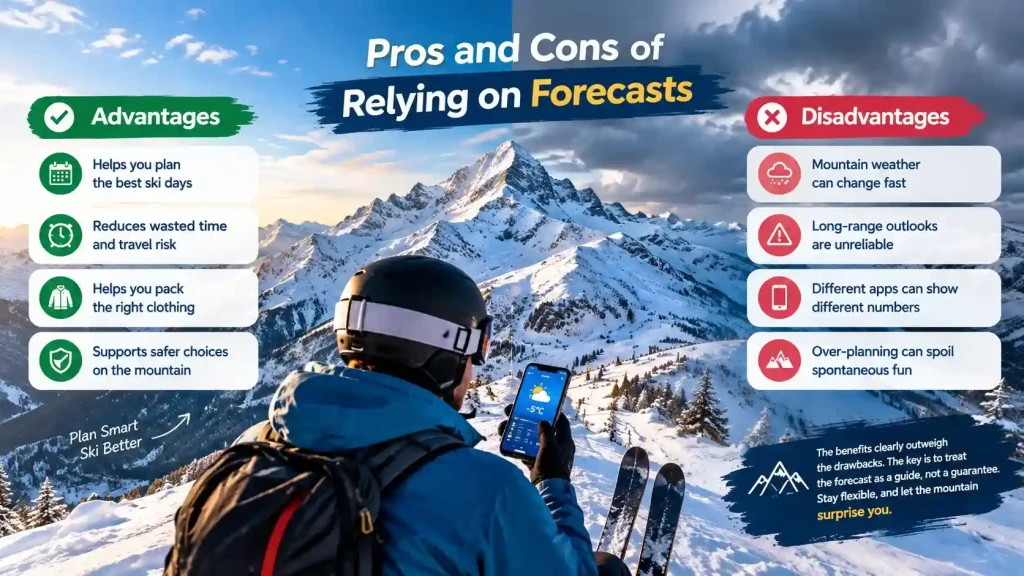
| Advantages | Disadvantages |
|---|---|
| Helps you plan the best ski days | Mountain weather can change fast |
| Reduces wasted time and travel risk | Long-range outlooks are unreliable |
| Helps you pack the right clothing | Different apps can show different numbers |
| Supports safer choices on the mountain | Over-planning can spoil spontaneous fun |
The benefits clearly outweigh the drawbacks. The key is to treat the forecast as a guide, not as a guarantee. Stay flexible, and let the mountain surprise you.
Expert Tips for Better Snow Planning
Experienced guests follow a few simple rules. They check more than one source and look for agreement. They read the freezing level before the snowfall total. They keep one day free in their plan, so they can ski the best snow when it arrives. Finally, they respect the mountain and listen to local advice.
Good preparation also makes a difference. Pack layers, waterproof gloves, and a spare pair of goggles. Arrange lift passes and lessons in advance if your trip falls in a busy week. Small steps like these protect your time and your enjoyment.
Related Article: When to Book a Ski Chalet to Get the Best Deals in 2026/27
Conclusion
The French Alps offer some of the best skiing on Earth, but great snow does not happen by luck alone. A reliable snow forecast helps you pick the right resort, the right dates, and the right day on the mountain. It also helps you choose a chalet that fits your plans, whether you want a ski-in ski-out location or a cosy retreat with a hot tub.
Remember the main points. Compare several sources, check the freezing level, trust short-range predictions more than long-range ones, and always read the avalanche bulletin before you leave the pistes. Stay flexible, and you will turn each forecast into a better holiday.
FAQs
Where can I find a reliable snow forecast for the French Alps?
Use national weather services, resort websites, and trusted mountain weather apps. Compare at least two sources, and look for the ones that show data at several altitudes. If they agree, you can trust the pattern.
How often should I check the snow forecast?
Check it once a day during the week before your trip. During your stay, read it each evening and again in the morning. Mountain weather can shift quickly, so a second look often pays off.
Which French Alps resorts have the most reliable snow?
High resorts such as Val d’Isère and Courchevel 1850 usually hold snow best, because their bases sit at about 1,850 meters. Lower resorts like Morzine can still offer great skiing, but they depend more on cold weather.
What is the best month for powder in the French Alps?
January often brings cold, dry snow and smaller crowds. February also offers good cover, although it feels busier. Conditions vary from year to year, so always check current reports.
Can a snow forecast be wrong?
Yes. Mountains create their own weather, and small changes in a storm path can move the snow to another valley. Short-range predictions work best, so rely on the next two or three days for firm plans.
Does fresh snow always mean a good ski day?
Not always. Heavy snowfall, strong wind, or poor visibility can close lifts and make skiing hard. Often the best conditions arrive the day after a storm, when the sky clears and the snow is still fresh.
If you’d like, I can also put this article in a file you can download.